
+371 20 009 031 contact@gtrans.lv
EN
  • ENEnglish

Demo build — English only. The live site ships all eight with hreflang.

Get a price

General cargo · LV → DK

Road freight from Latvia to Denmark

Pallets, part loads and full loads collected in Latvia and delivered in Denmark. Two routes exist, both entirely inside the EU, and the choice between them is made on driver hours and on the bridge.

We reply within 24 hours — same business day if you contact us before 12:00.

  • Service General cargo
  • Crossing DFDS, Klaipėda–Karlshamn
  • Customs None — EU to EU
  • Reply within 24 hours

01 — The route

How this route actually runs

Sequence and structure, in the order they happen. We do not publish transit times or distances for any lane — they are not client-approved, and a number nobody can stand behind is worse than no number at all.

  1. STEP 01

    Collection

    We collect from the Latvian address you give us. Pallets, part loads and full loads.

  2. STEP 02

    Road south to Klaipėda

    Through Lithuania to the ferry terminal. Accompanied freight closes an hour and a half before departure, and two hours for hazardous goods.

  3. STEP 03

    The crossing

    Klaipėda–Karlshamn with DFDS, sailing with TT-Line. A crossing of that scheduled length serves as the driver's rest rather than as dead time.

  4. STEP 04

    Across Sweden and over the Øresund

    West across southern Sweden and over the Øresund Bridge into Denmark, then on to the delivery address.

Latvia to Denmark — how the route runs A schematic of the route: Latvia by road to Klaipėda, a sea crossing operated by Dfds to Karlshamn, then by road on to Denmark. The drawing shows the sequence of the route only; it carries no distances and no times. LV LATVIA DK DENMARK ROAD ROAD DFDS KLAIPĖDA KARLSHAMN SEA CROSSING
The sea route lands in Sweden; the last leg into Denmark runs over the Øresund Bridge.

The route · Latvia to Denmark

Two routes, and the Øresund decides between them.

A load from Latvia to Denmark can go two ways. The sea route runs south to Klaipėda, across to Karlshamn with DFDS, then west across southern Sweden and over the Øresund Bridge. The land route runs south through Lithuania and Poland and up through Germany, with no crossing at all. Both are entirely inside the EU, so neither has a customs event — the choice is made on driver hours and on the bridge, not on paperwork.

The sea route
DFDS, sailing with TT-Line, states the crossing at 13 hours across nine sailings a week. Accompanied freight closes an hour and a half before departure, two hours for hazardous goods. A crossing scheduled at that length can serve as the driver's regular daily rest, and it is long enough for a regular weekly rest where a cabin is available.
The land route
Through Poland and Germany with no crossing — but every hour of it is driving time counted against a hard daily limit.
The Øresund Bridge
The bridge charges freight a toll per crossing for vehicles over nine metres, and a business account cuts it substantially. Hazardous goods are carried at no extra charge. The published tariff is on oresundsbron.com; we do not reprint rates that can change between the quote and the crossing.

03 — On this lane

What is different about Latvia to Denmark

Every lane on this corridor has its own rules. These are the ones that change what happens to your shipment.

The crossing is the driver's rest

Article 9(1) of Regulation 561/2006 lets a driver who accompanies the vehicle on a ferry take a regular daily rest period on board: the period may be interrupted not more than twice by other activities, not exceeding one hour in total, and the driver must have access to a sleeper cabin, bunk or couchette. On an overnight Baltic crossing that makes the sea leg legal rest rather than dead time — which is exactly why the sea route beats the land route on this corridor. For a regular weekly rest the journey has to be scheduled at eight hours or more with cabin access. A crossing sitting barely above that threshold is not something to build a plan on; one scheduled well clear of it is.
No customs event on this lane

Both ends of this lane are EU Member States inside the EU customs union. There is no customs declaration, no transit document and no border formality here — the load moves in free circulation from the moment it is picked up. Norway is the one exception on our map, and it has a page of its own.

Not cabotage, and not a posting

Article 1(3) of Directive (EU) 2020/1057 is explicit: “a driver shall not be considered to be posted… when performing bilateral transport operations in respect of goods.” Latvia to the Nordics and the Nordics to Latvia are bilateral operations. No posting declaration, no host-state minimum-wage exposure, and the cabotage counter never starts.

Denmark has no winter tyre law — and a rule about studs that catches people out

There is no Danish winter tyre requirement. What there is instead is a duty under § 67(3) of the Road Traffic Act that the vehicle must not be fitted with tyres that are “obviously unsuitable”, and a minimum tread depth of 1.6 mm that is explicitly the same above and below 3,500 kg. Studs are permitted from 1 November to 15 April — but only if every wheel of the vehicle and the trailer carries them, with roughly the same number on each. A studded tractor unit pulling an unstudded trailer is not compliant.

What the CMR note actually does

Article 4 of the CMR is the clause most competitor sites get wrong: “the absence, irregularity or loss of the consignment note shall not affect the existence or the validity of the contract of carriage.” So “without a CMR you are not covered” is simply false — CMR liability applies whether or not the note was correctly issued. What the note is is the legal record: three originals — sender, with the goods, carrier — and eleven mandatory particulars, one of which is the instructions required for Customs formalities. e-CMR is permitted under Article 8(4a) of Regulation 1072/2009.

What fits

Directive 96/53/EC sets the envelope: a road train at 18.75 m, an articulated combination at 16.50 m, 2.55 m wide, 4.00 m high, and 40 tonnes on a five- or six-axle combination. If your load is outside any of those, say so when you ask — it changes the equipment, not the answer.

04 — By road

What we move on this lane

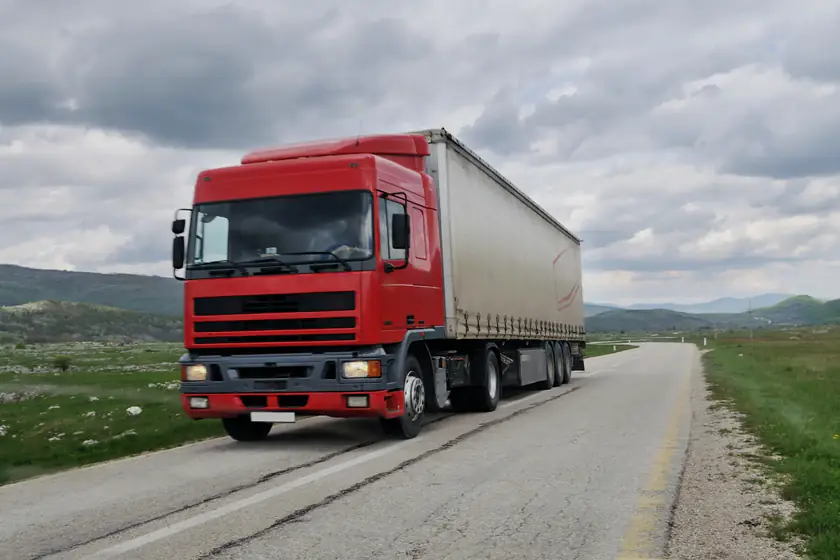
A curtainsider trailer on a rural main road

LV → DK

Pallets to full loads

General cargo

Pallets, part loads and full loads by road between the Nordics and the Baltics, in both directions.

  • Pallets
  • Part loads
  • Full loads
  • Both directions

05 — Get a price

Quote request · 2 steps

Get a price for Latvia to Denmark

The route is already filled in — Latvia to Denmark. Add the two addresses and how to reach you. No obligation, and no account to create.

Shipment

Contact

Step 1 of 2 — the shipment

Step 1 of 2 — the shipment

What are you moving?
From
To

We use your details only to answer this request. Privacy policy

Request received

We reply within 24 hours — same business day if you contacted us before 12:00.

06 — Questions

Latvia to Denmark — the things people ask first

Q1Does the load go by sea or by land?

Either is possible and both are entirely inside the EU, so neither carries a customs event. The sea route runs Klaipėda to Karlshamn with DFDS and then over the Øresund; the land route runs through Poland and Germany. The difference is driver hours: a scheduled 13-hour crossing counts as the driver's rest, while every hour of the land route is driving time.

Q2Is there a toll on the Øresund Bridge for freight?

Yes — a toll per crossing for vehicles over nine metres, materially reduced on a business account, with hazardous goods carried at no extra charge. The current tariff is published by the bridge operator at oresundsbron.com. We do not reprint rates that can change between the quote and the crossing.

Q3Does Denmark require winter tyres?

No. Denmark has no winter tyre mandate. It has a suitability duty instead — § 67(3) of the Road Traffic Act requires that the vehicle is not fitted with obviously unsuitable tyres — and a 1.6 mm minimum tread depth that applies identically above and below 3,500 kg. The trap is studs: they are permitted from 1 November to 15 April only if every wheel of the vehicle and the trailer carries them.

Q4Is a Latvia to Denmark haul cabotage?

No. A laden journey whose departure and arrival are in two different Member States is international carriage under Article 2(2)(a) of Regulation 1072/2009, and a bilateral operation between Latvia and a Nordic country is not a posting under Article 1(3) of Directive (EU) 2020/1057.

Q5Do you take hazardous goods?

Tell us what it is and we will tell you plainly whether we can take it. The ferry operators treat hazardous freight differently — DFDS closes check-in two hours before departure for it rather than an hour and a half — and the classification has to be settled before booking, not at the ramp.

Q6What about insurance?

Cover is confirmed with you when the shipment is finalised, before anything moves.

07 — Nearby

Other lanes on this corridor

We run Denmark to Latvia as well — the return direction is identical in ferry time and customs status. There is no separate page for it yet, so ask for a price and say which way round it is.

All routes

Get a price

Tell us what and where.

We reply within 24 hours — same business day if you contact us before 12:00.

Get a price

Daugavas iela 38, Mārupe, Mārupes novads, LV-2167, Latvia